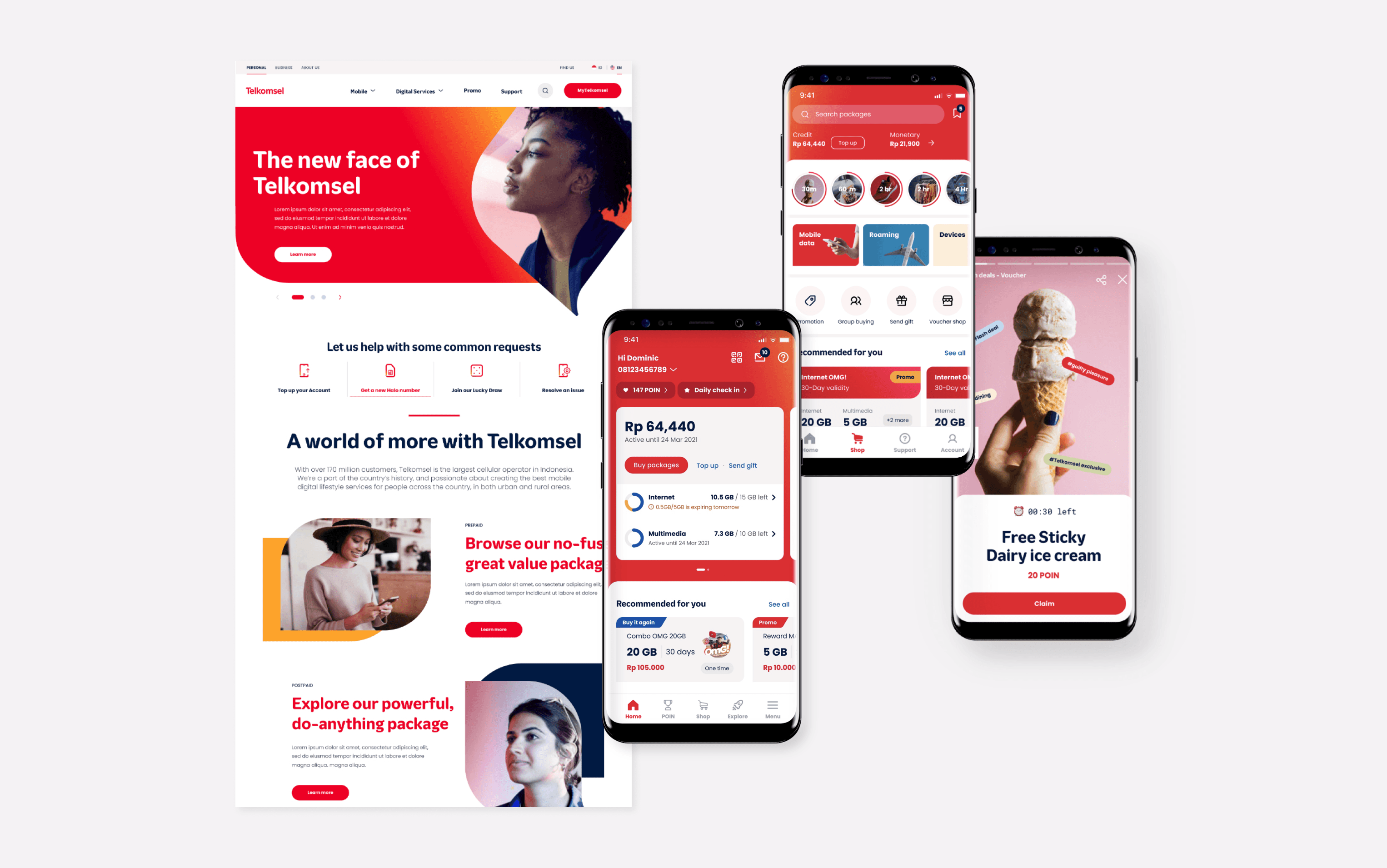
Telkomsel: Brand Rejuvenation, App Strategy, and Delivery.

Telkomsel: Brand Rejuvenation, App Strategy, and Delivery.

We collaborated with Tekomsel — Indonesia’s largest telecommunications company — to transform their traditional offline brand into new digital experiences, catering to the needs of 163 million customers nationwide.


Our work involved researching Jakarta (via 3rd party research agency), developing a content strategy, creating a new visual design direction, and devising interaction models for their app and website. We also documented the design in a digital design language system (DLS) with components and templates in code, enabling Telkomsel to deliver consistent and enjoyable experiences at a large scale.

We collaborated with Tekomsel — Indonesia’s largest telecommunications company — to transform their traditional offline brand into new digital experiences, catering to the needs of 163 million customers nationwide.

Our work involved researching Jakarta (via 3rd party research agency), developing a content strategy, creating a new visual design direction, and devising interaction models for their app and website. We also documented the design in a digital design language system (DLS) with components and templates in code, enabling Telkomsel to deliver consistent and enjoyable experiences at a large scale.
We collaborated with Tekomsel — Indonesia’s largest telecommunications company — to transform their traditional offline brand into new digital experiences, catering to the needs of 163 million customers nationwide.

Our work involved researching Jakarta (via 3rd party research agency), developing a content strategy, creating a new visual design direction, and devising interaction models for their app and website. We also documented the design in a digital design language system (DLS) with components and templates in code, enabling Telkomsel to deliver consistent and enjoyable experiences at a large scale.

Industry

Industry
Telecommunication

Role

Role
Lead interaction designer
(App pod)

Responsibility

Responsibility
Interaction design

Impact

The project went live on June 18, 2021, and was honoured with the Singapore Good Design 2022 award in the ‘Experience Design’ category. Also, MyTelkomsel app received 4.7 stars from 1.2 million App Store reviewers and 4.6 stars from 10.8 million Google Play reviewers (Sep 2024).

Context
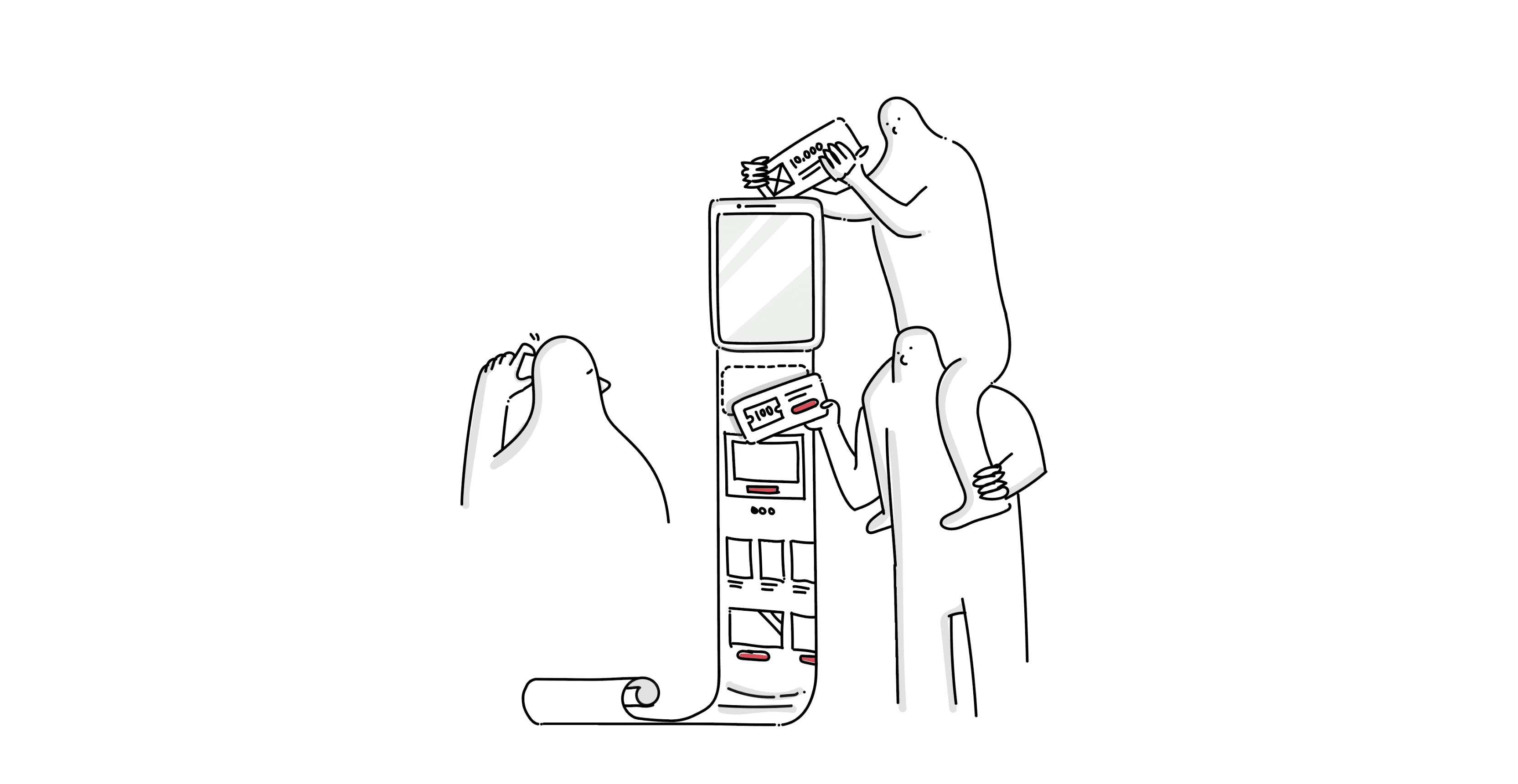
Highlight of the design challenge: the tension between users + the product team vs. business owners "Who can achieve the homepage as they wish."
Customers

"…hard to find promotions and products suitable for me."

"App is too heavy. My phone can't open it."

  • Many Indonesian customers use lower-powered mobile devices and slower internet connections. As a result, they often rely on SMS to check their balance rather than using an app since the current Telkomsel app is too slow and resource-heavy for most users.
  • It was difficult to navigate to the most relevant product due to the large number of data products with unintuitive packet names.
Telkomsel business owners

"The home page is the best real estate on our platform."

"I want my products to be surfaced on top of the Homepage."

  • Due to these performance issues, key metrics like acquisition, retention, and other app-related KPIs have been negatively impacted.
  • The stakeholders at Telkomsel have pushed to add more content and features to the app's above-the-fold area, which has further slowed it down due to its impact on their KPIs.
  • Generating more products is one of the critical KPI metrics for the product owners.

Telkomsel product team

"… want you to eliminate a long carpet…"

  • The product team is struggling to shorten the homepage due to the most business owners' desire to include more items on the Homepage (expensive real estate).

Approach
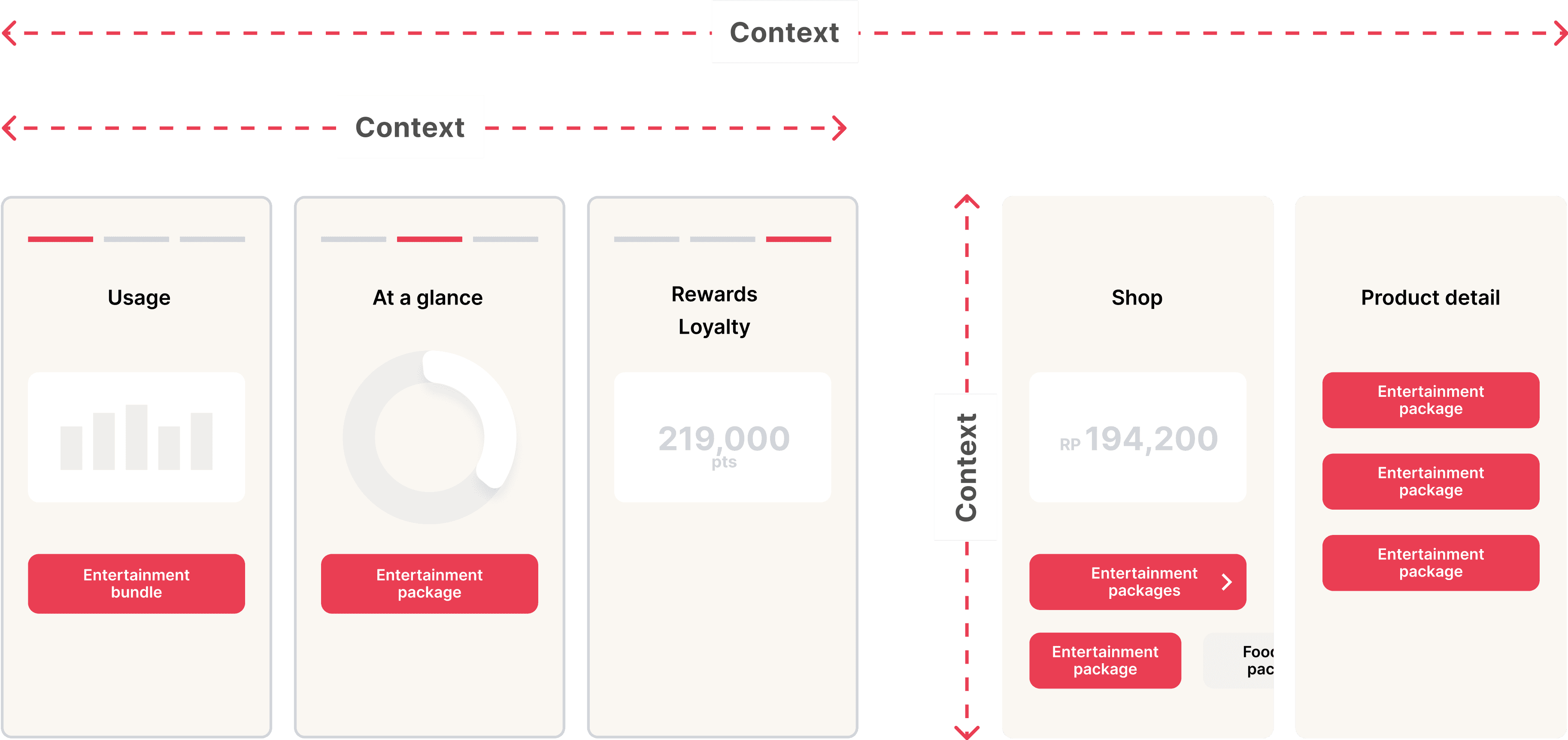
We faced a seemingly impossible challenge: business owners needed to showcase more products on the homepage, while both users and the product team demanded a simpler, more streamlined interface.


To solve the issue, the team developed an interaction model, a '3 rooms home' — a context-based, scalable homepage — that organizes information into distinct categories. This approach led to a shorter but scalable landing page and improved navigation experience, making it more predictable to find information.

We faced a seemingly impossible challenge: business owners needed to showcase more products on the homepage, while both users and the product team demanded a simpler, more streamlined interface.


To solve the issue, the team developed an interaction model with a '3 rooms' Home — the context-based scalable homepage — organizing information into distinct categories. This approach led to a shorter but scalable landing page and improved navigation experience, making it more predictable to find information.


To further support the business objectives, we also introduced a 'soft category' structure within a personalization framework. This enabled business owners to surface products in a personalized, scalable manner, delivering tailored experiences to users without overwhelming them.


The solution successfully balanced user needs with business goals, creating a more efficient yet personalized interaction.

We faced a seemingly impossible challenge: business owners needed to showcase more products on the homepage, while both users and the product team demanded a simpler, more streamlined interface.


To solve the issue, the team developed an interaction model with a '3 rooms' Home — the context-based scalable homepage — organizing information into distinct categories. This approach led to a shorter but scalable landing page and improved navigation experience, making it more predictable to find information.


To further support the business objectives, we also introduced a 'soft category' structure within a personalization framework. This enabled business owners to surface products in a personalized, scalable manner, delivering tailored experiences to users without overwhelming them.


The solution successfully balanced user needs with business goals, creating a more efficient yet personalized interaction.

a context-based scalable homepage interaction named '3 rooms homepage'
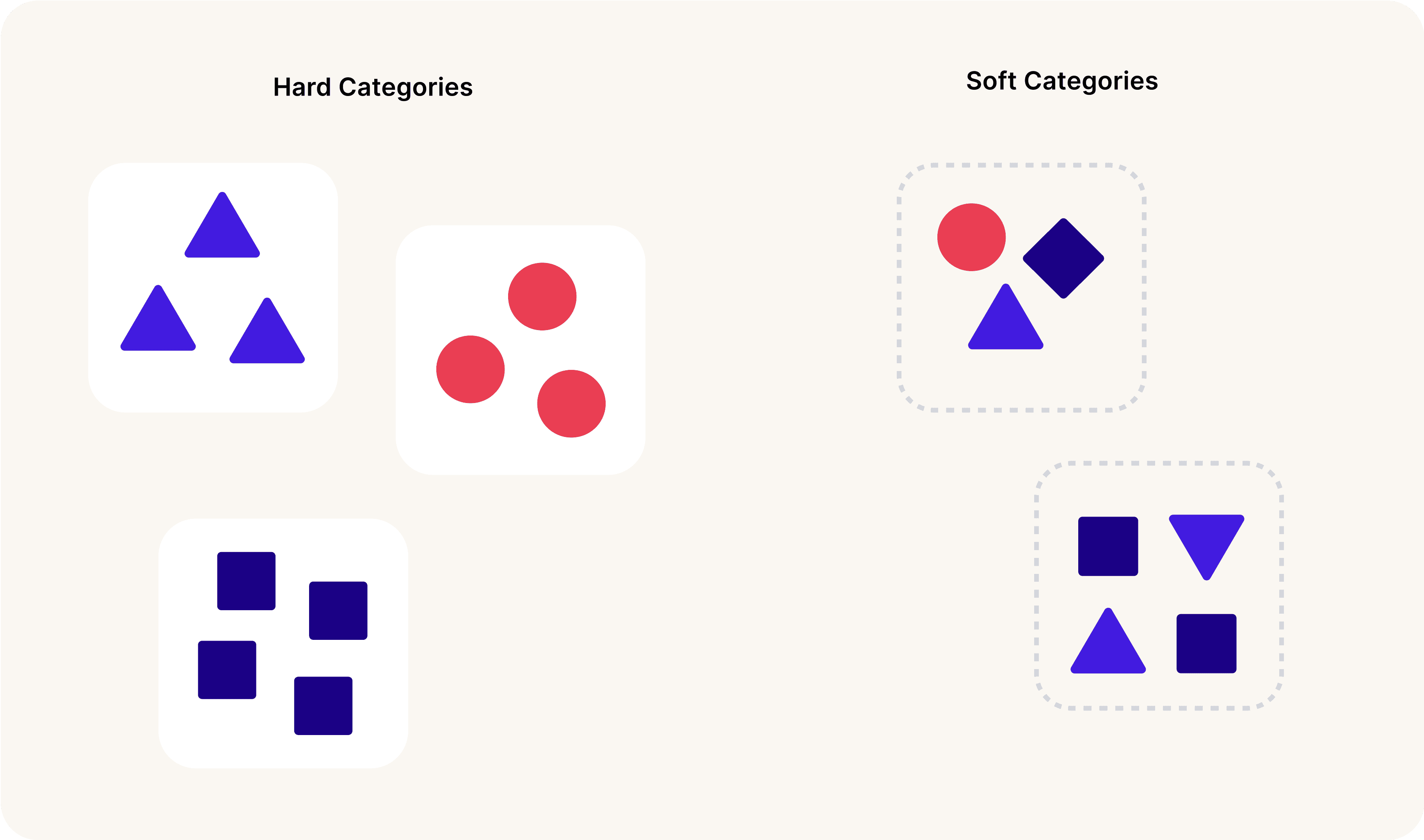
To further support the business objectives — advertising data products — we also introduced a playlist type 'soft category' interaction pattern within a personalization framework. This enabled business owners to surface still enough contents but in a personalized, scalable manner, delivering tailored experiences to users without overwhelming them.


The suggested app strategy successfully balanced user needs with business goals, creating a more efficient yet personalized interaction.

We faced a seemingly impossible challenge: business owners needed to showcase more products on the homepage, while both users and the product team demanded a simpler, more streamlined interface.


To solve the issue, the team developed an interaction model with a '3 rooms' Home — the context-based scalable homepage — organizing information into distinct categories. This approach led to a shorter but scalable landing page and improved navigation experience, making it more predictable to find information.


To further support the business objectives, we also introduced a 'soft category' structure within a personalization framework. This enabled business owners to surface products in a personalized, scalable manner, delivering tailored experiences to users without overwhelming them.


The solution successfully balanced user needs with business goals, creating a more efficient yet personalized interaction.

We faced a seemingly impossible challenge: business owners needed to showcase more products on the homepage, while both users and the product team demanded a simpler, more streamlined interface.


To solve the issue, the team developed an interaction model with a '3 rooms' Home — the context-based scalable homepage — organizing information into distinct categories. This approach led to a shorter but scalable landing page and improved navigation experience, making it more predictable to find information.


To further support the business objectives, we also introduced a 'soft category' structure within a personalization framework. This enabled business owners to surface products in a personalized, scalable manner, delivering tailored experiences to users without overwhelming them.


The solution successfully balanced user needs with business goals, creating a more efficient yet personalized interaction.

A 'soft category' interaction that focuses on user experiences rather than traditional hard categories like Travel or Video. For example, 'Night-owl Netflix viewers' offers tailored data packages for users who stream video content at night, blending multiple categories into a more personalised experience.

A brilliant basics — Information architecture

Often, we overlook the crucial and impactful nature of good information architecture for complex digital products. We list down all objects and consolidate them into intuitive categories to help users find the desired products.
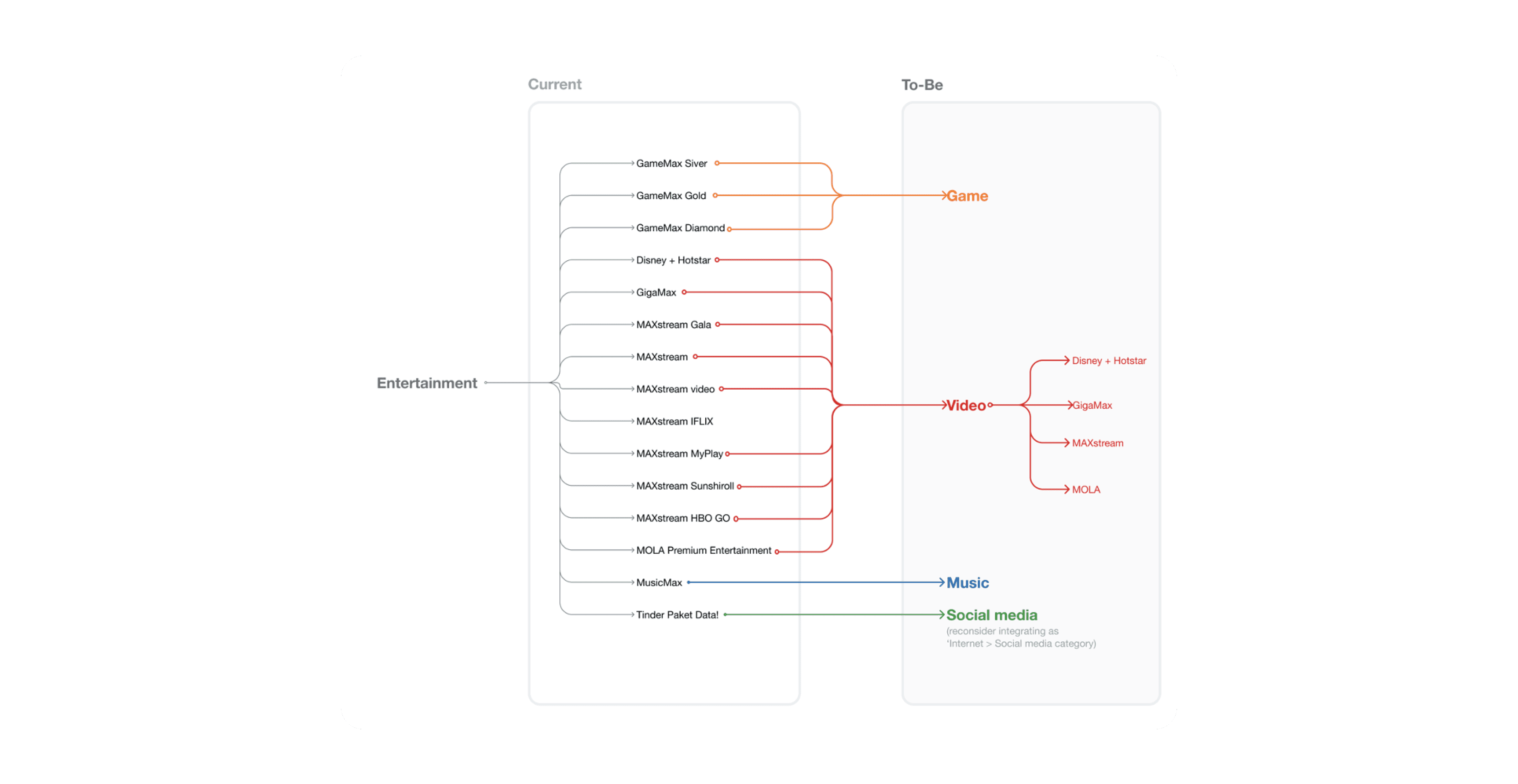
Sample visualisation of information architecture design of how to simplify the Entertainment products

Design

Context-based scalable homepage

The 'Summary' page (at the centre) presents the essential information, including the remaining quota and top recommended products tailored to the user's needs.


The 'Usage' page is designed to provide insights into data consumption patterns. It tells a personalized story by analyzing data usage behaviour, linking relevant packages, and offering data visualisations for deeper exploration.


The 'Rewards' page targets royalty-focused customers—a key insight from our research, which revealed that the majority of Indonesian users place high value on rewards. This page is crafted to meet their expectations, enhancing engagement and satisfaction.
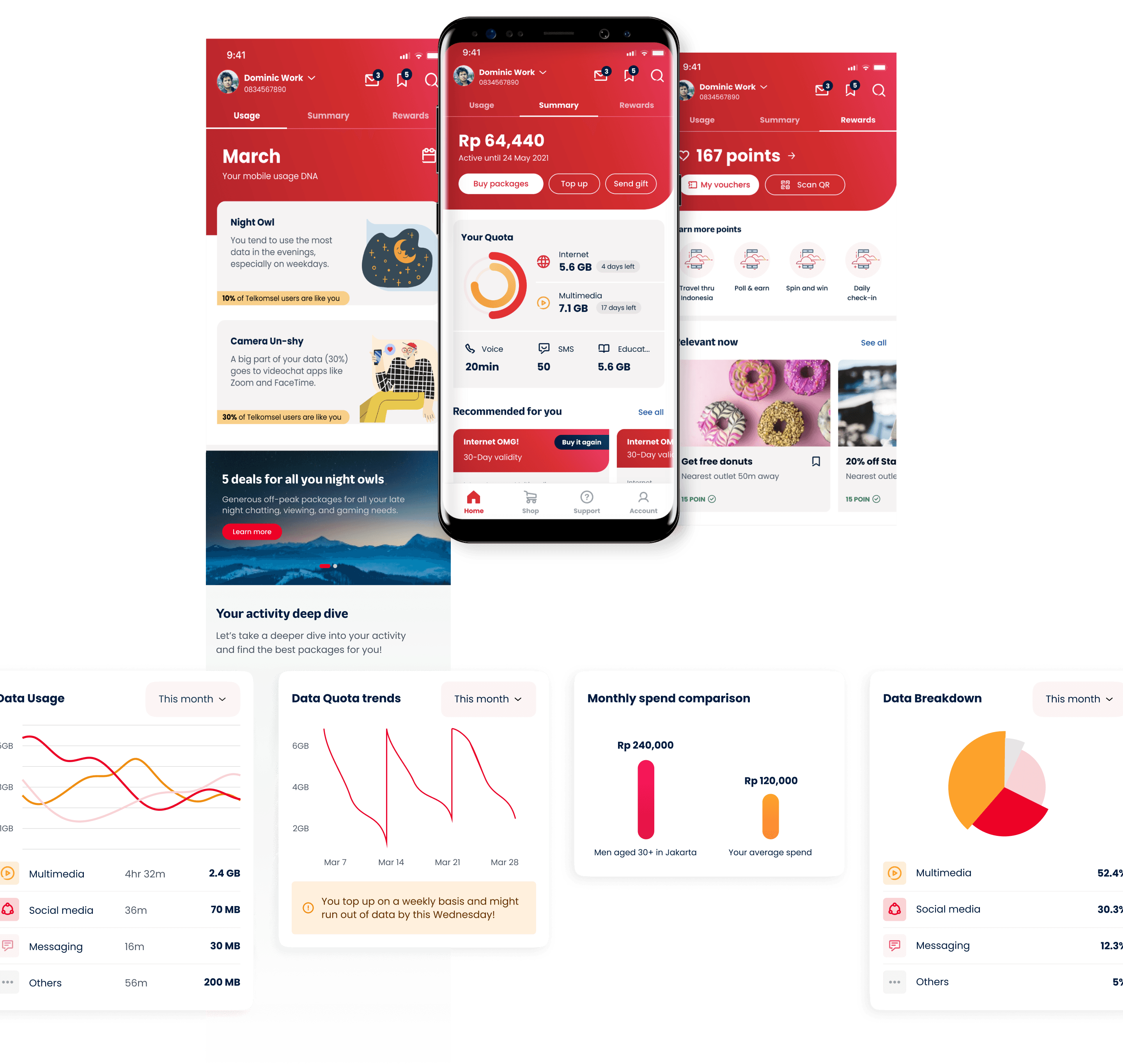
Product-related screens
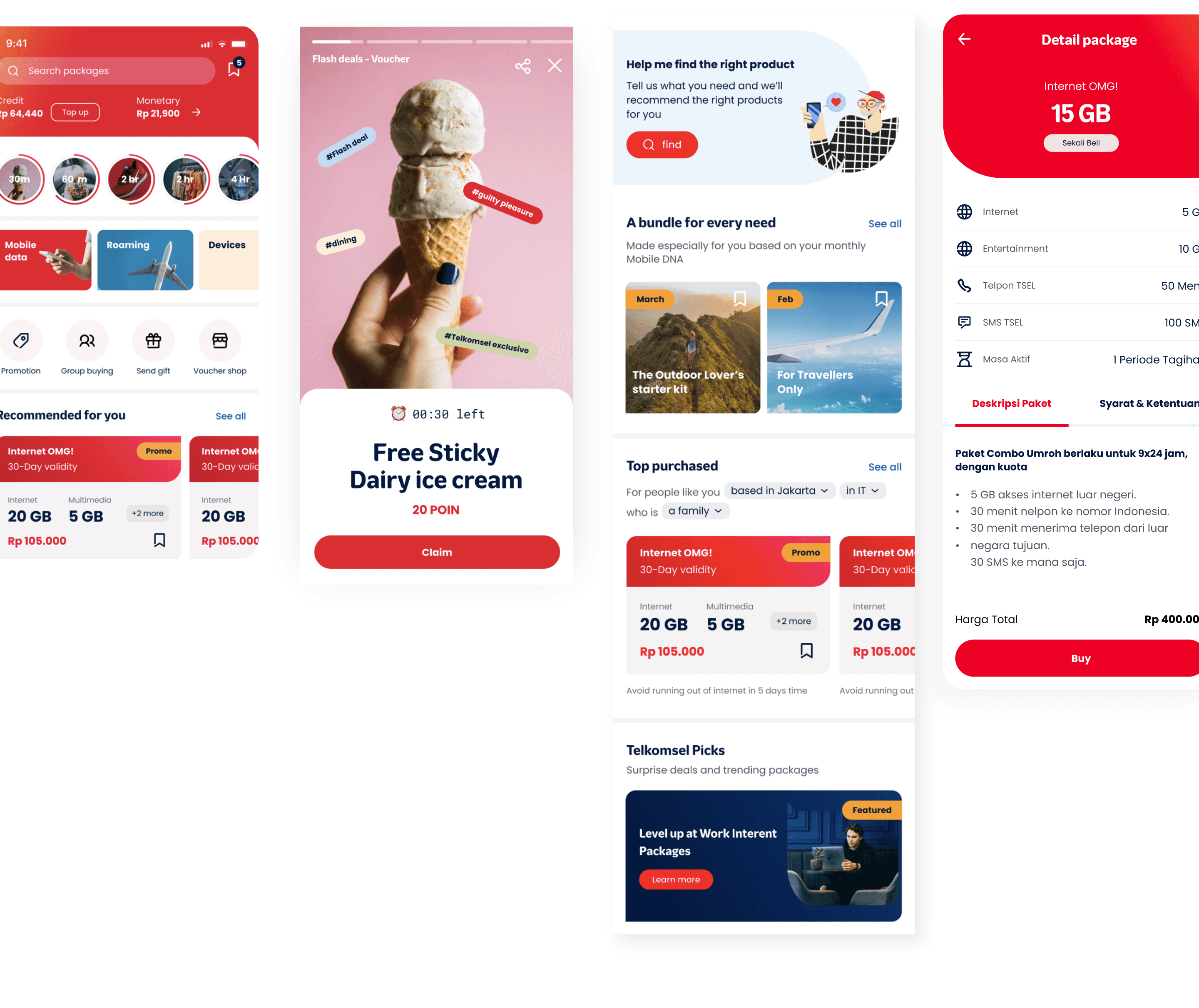
We explored various strategies to help users to find more relevant/contextual product ideas. For example, we reimagined how users discover products online by bringing elements of the offline experience into the digital world. Just like a store clerk would greet and guide customers to the most relevant products in a physical store.

Related projects.
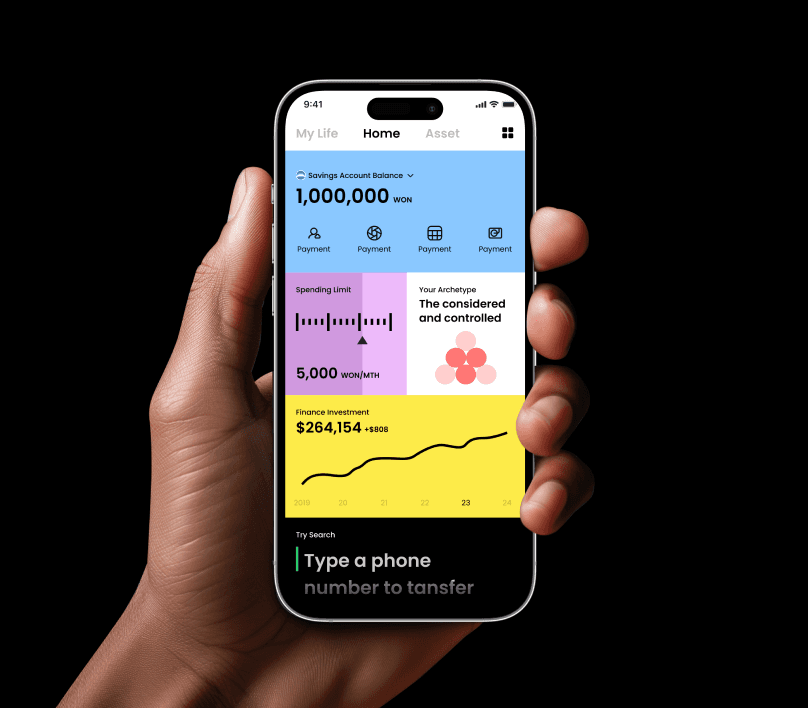
Interaction model

Design leadership

From capability to delivery

Led design of an innovation project for LG Design Studio, including a unique banking app strategy, through co-creation and capability building with client teams. This collaboration secured a $20M investment for further organizational upskilling engagements.

Coming soon…